S/01
DSP Algorithm Development
Detection, dynamics, spectral processing. I take an idea from literature review and prototyping to a real-time-safe C++ implementation: tuned by ear, verified by measurement.
researchprototypingc++
Vocal DSPsibilance detectionC++ · JUCE · Web Audio
I build sibilance detection, de-essing and vocal dynamics, from the first research prototype to shipped C++, for plugin makers and for products where speech has to stay clean. A year of client research on a next-generation de-esser got me deep into what makes an S readable to a machine. Seven years of producing records is why I check the result by ear before I trust the plot.
How every project runs. Hover or tap a stage for proof.
Detection, dynamics, spectral processing. I take an idea from literature review and prototyping to a real-time-safe C++ implementation: tuned by ear, verified by measurement.
Production-ready VST3/AU plug-ins with JUCE. Parameter design, preset systems, and a UI your users don't need a manual for. I've spent years being that user.
The granular pad and the loudness meter on this page are real DSP running live in the Web Audio API, not a screen recording. If it can run in a browser, I can build it there too.
Monophonic vocal pitcher as VST3/AU plug-in: pitch shifting up to an octave, independent formant control, mix. DSP prototyped in Python, ported to C++/JUCE with a WebView UI, signed and notarized for macOS plus a Windows build. Free download.
Detection and processing research for a next-generation de-esser: sibilance detection strategies, level-independent triggering, and artifact-free gain reduction, evaluated against the plugins producers actually reach for.
Restoring sibilance that de-essing, codecs or neural restoration destroyed: why the worst damage is invisible to the detector, why gain alone hits a physical wall, and when a repair tool should refuse to repair.
A blind test where every sibilant was replaced instead of ducked: why levelling beats de-essing, why the replacement is borrowed from the same recording rather than invented, and what the listening tests actually showed.
Soft clipper for 808s and drums: the Fruity Soft Clipper curve reverse-engineered down to float noise (max error 4.7e-8), shipped as VST3/AU with polyphase oversampling the original never had, delta listening, and mono low-end. Free download.
Desktop audio QC app that verifies audiobook chapters and final mixes against ACX, Netflix, Apple TV+ and EBU R128 delivery specs. BS.1770 measurement engine, local processing, PDF reports. Designed, built and shipped solo, from DSP core to installer.
Spectral conflict analysis across a sidechain pair: where two tracks fight for the same band. The detector I started with was disproved by a level sweep, its replacement was validated against a 51-beat corpus and blind listening tests, and the engine is a real-time-safe C++ core at 0.002% of the audio thread budget. The display runs in the browser on real engine output.
A granular synthesizer built on the Web Audio API, chopping a short ambient loop into little grains in real time. Drag across the pad: left to right scrubs through the recording, up and down morphs the grain texture from glitchy to smooth while gently shifting the pitch along a minor pentatonic, so it always lands somewhere musical. Every dot you see is a grain you hear.
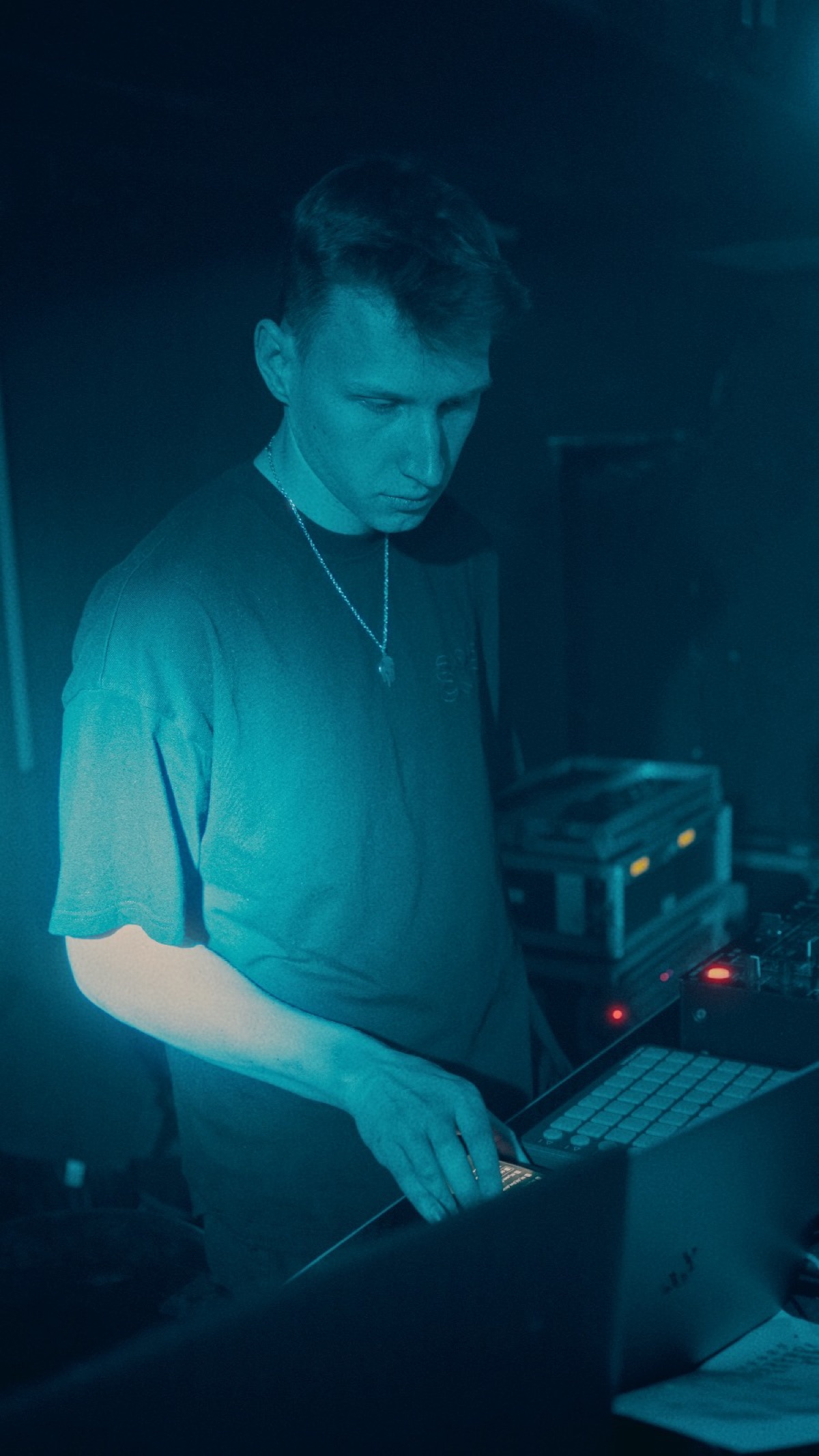
I started as a beatmaker. 300+ tracks later I kept running into the same wall: the tool I needed didn't exist. So I studied audio engineering, learned C++, and started building it myself. First for my own sessions, then for clients.
That double perspective is the whole point. Most DSP developers have never mixed a record; most producers can't write real-time code. I sit exactly in between: I know from the producer's chair and the user's ear what makes a plugin great, and from the engineering side how to actually ship it.
Booking projects for Q4 2026
One email is enough. Tell me what you're building and I'll tell you honestly whether I'm the right person for it.